
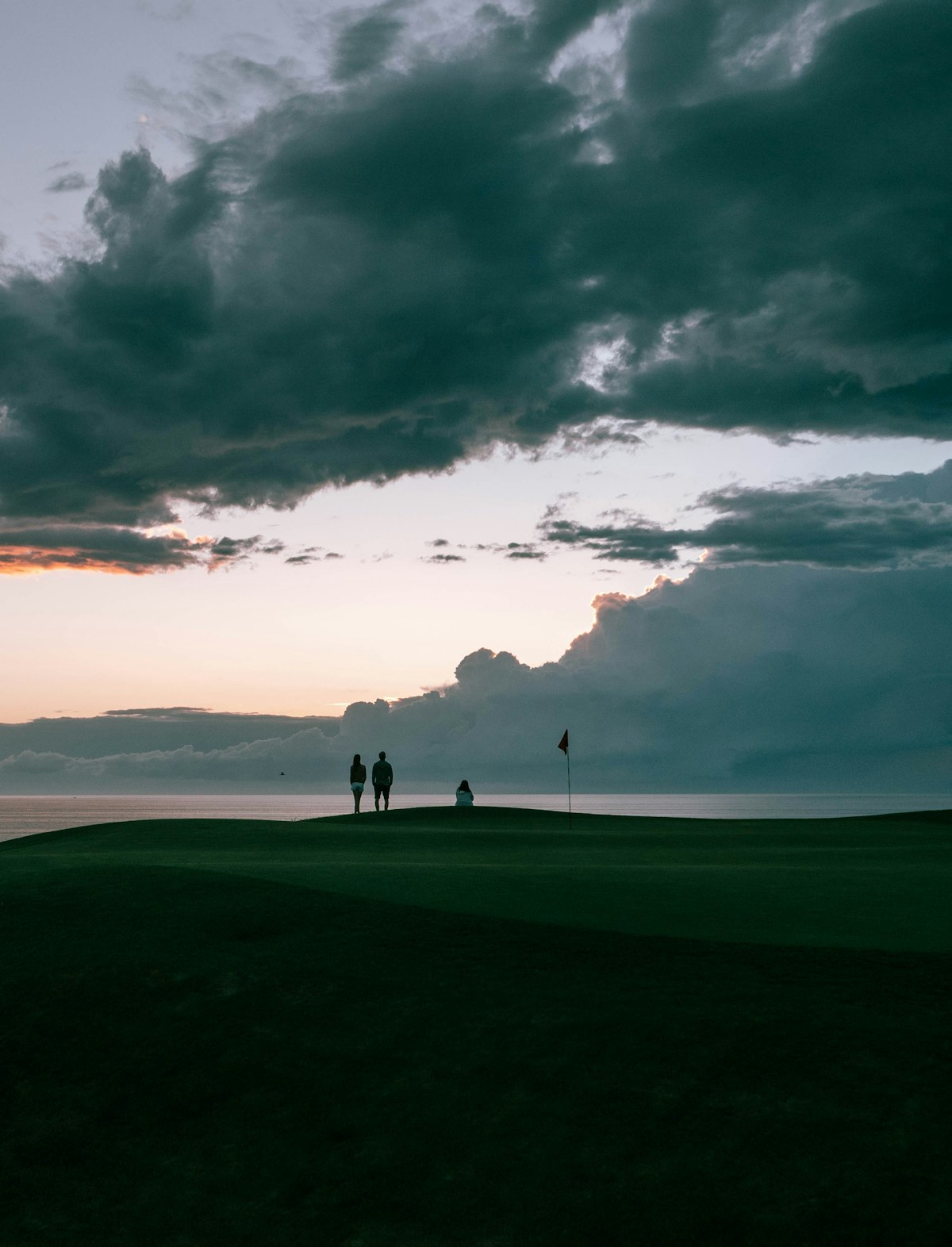
There are golf courses that spend decades waiting for the tournament that finally proves what regulars already knew, and there are golf courses built with that tournament already in mind. Bernardus Golf, tucked into heathland outside the village of Cromvoirt in the southern Netherlands, is very much the second kind. It opened in 2018, hosted three editions of the Dutch Open inside its first five years, and this September becomes the first course in the country’s history to stage a Solheim Cup.
Built with intent
The land came from Robert van der Wallen, the chairman of PSV Eindhoven, who bought it in 2015 with a golf course already in mind and brought in the American architect Kyle Phillips to design it. Phillips’s résumé runs to Kingsbarns in Scotland and Yas Links in Abu Dhabi, two courses built on the idea that a modern design can look and play as though it has always been there, and Bernardus follows the same instinct. Construction began in early 2016, the 85-hectare heathland layout opened in 2018, and a clubhouse designed by Patrick Russ and Pieter Laureys followed soon after. Six sets of tees stretch the course from just over 4,700 metres at the front to 6,790 metres, roughly 7,430 yards, from the tips, a par 72 that can be set up gently for a member’s Tuesday afternoon or turned into a proper examination when the occasion calls for it.
A heathland course built to play like a links
Heathland golf occupies an odd category of its own: sandy, well-drained ground that lets a course play firm and fast without needing the sea beside it. Bernardus leans fully into that identity, with wide, rolling fairways, generous green surrounds for the higher-handicap player, and enough strategically placed bunkering and rumpled ground to keep a scratch golfer thinking on every tee. In its rougher corners, the look owes something to the sandy, naturalised edges of Pinehurst No. 2, while the overall routing has drawn comparisons to Pine Valley and Merion for how completely it settles into its own landscape rather than announcing itself.
A proving ground before the main event
The club did not have to wait long to learn whether the golf held up under tournament pressure. Between 2021 and 2023, Bernardus hosted three straight editions of the DP World Tour’s Dutch Open, with Kristoffer Broberg, Victor Perez and Pablo Larrazábal taking turns to win it. Each edition added a little more credibility, and in 2022, with the course barely four years old, it was awarded the 2026 Solheim Cup, the first time the event will be played anywhere in the Netherlands.
An uncommon kind of host
Most courses built to attract a marquee team event these days are private clubs assembled for exactly that purpose. Bernardus is a rarer thing: a course anyone can play, “member for the day” access and all, that turned out to be good enough to get picked regardless. It is a detail Dutch golf will lean on this September, a reminder that a well-built course does not need an exclusive membership roll to be worth a major team event, only architecture that holds up once the best players in the world start trying to take it apart.
What September will ask of it
A Solheim Cup asks something different of a golf course than a regular stroke-play stop. Match play rewards drivable par fours and risk-reward par fives more than a strict stroke-play test does, and it needs a routing that lets thousands of spectators move around the property without bottlenecking at every green. Bernardus’s wide corridors and gently rolling terrain were built, whether by design or happy accident, for exactly that kind of week. When Angela Stanford’s American side and Anna Nordqvist’s European team tee off on September 11, they will be doing so on a course that has spent less than a decade proving it belongs on this stage, and has yet to lose the argument.