
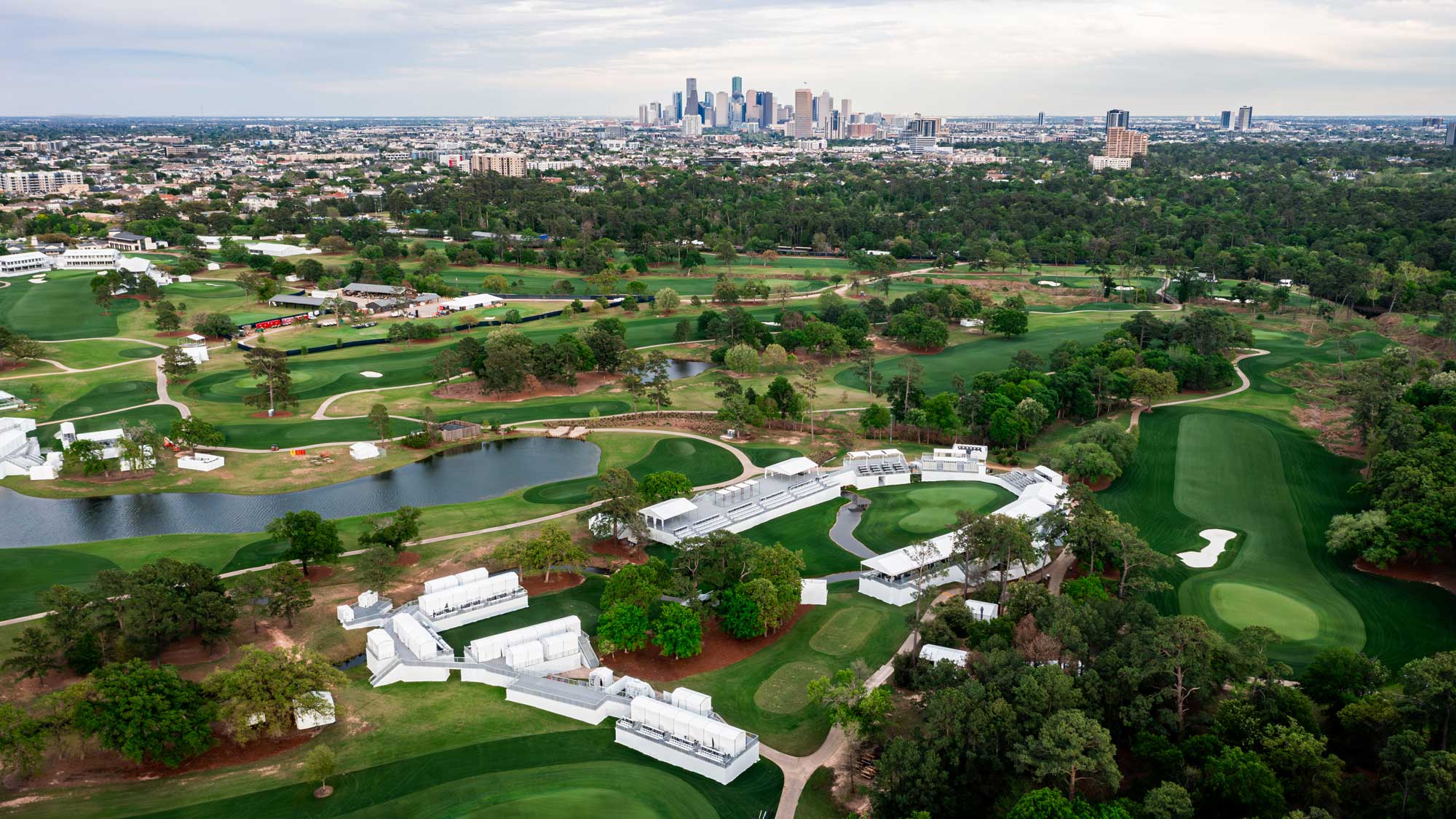
The Chevron Championship arrives next week with all the quiet anticipation a first major of the year is supposed to carry and very little of the usual scenery. Rancho Mirage is gone. Carlton Woods, the private club that hosted the tournament’s first two Houston editions, is also gone. What the LPGA has in its place is Memorial Park, the Tom Doak redesign of a Houston municipal course that the men’s tour plays every spring, and a field that contains three or four of the most compelling stories in the women’s game.
The 55th edition runs April 23-26 with an eight-million-dollar purse and the first of five majors the women will chase this season. The tradition of the winner’s leap into the pond by the 18th green is being preserved, with a temporary pool installed beside the finishing green to honour it. That is the sort of detail that tells you the tour understands what parts of its history are worth carrying from one venue to the next.
Saigo defends, against odds that have shifted
Mao Saigo won the Chevron last April in a five-way playoff — the largest in the history of LPGA majors — with a putt on the 73rd hole that in hindsight looked both unlikely and inevitable. Defending a major is a different proposition from winning one for the first time. Saigo has played well enough so far in 2026 to suggest the 2025 victory was not a fluke, with three top-tens on the LPGA and a win on the Japan LPGA in March, but her record on unfamiliar venues is patchy and Memorial Park is about as unfamiliar as it gets. The course is longer than anything the Chevron has used in the past decade, with wider corridors off the tee and larger, more severely contoured greens than the Texas women’s fields are used to seeing.
The venue change is in Saigo’s favour in one respect. Last year’s playoff partners — including Angel Yin, Ariya Jutanugarn, and Lindy Duncan — all spoke afterwards about how small the margins were at Carlton Woods, how every hole asked the same questions. Memorial Park will not ask the same questions. It will ask more varied ones, which tends to favour the player who strikes the ball best on the day, and Saigo is capable of being that player.
Korda and the world number one problem
Nelly Korda is still Nelly Korda. The 2024 Chevron winner’s season has started unevenly — a quiet finish at the Aramco Championship earlier in April after a promising spring — but when Korda arrives at a major she arrives as Korda. Her record in the women’s majors since the beginning of 2023 is the best in the game, full stop, and Memorial Park is the sort of ball-strikers’ course where her iron play ought to be decisive.
The complication is Jeeno Thitikul, who overtook Korda at the top of the Rolex Rankings in late 2025 and has not looked like giving the position back. Thitikul is the straightest driver on tour, has the calmest temperament under leaderboard pressure, and has still not won a major. That last detail is the one she will be asked about all week, and at some point — probably at Memorial Park, if not there then later this year — the question is going to be answered. World number ones get to this point and then almost always break through.
The rising group
Minjee Lee’s last five rounds of major championship golf have been among her best, and a return to a course in Texas — where she has won twice — will not hurt her chances. Lauren Coughlin, who won the Aramco Championship on April 5 by five shots, arrives with the kind of week-of-form that tends to travel. Rose Zhang, still only 23, has added distance over the winter and looks increasingly comfortable on longer major venues. Atthaya Thitikul’s younger sister Eila has started the season with two top-five finishes and a putting average that is among the best on tour.
Charley Hull, meanwhile, is Charley Hull. The Englishwoman has never won a major, continues to be one of the best ball-strikers in the women’s game, and is playing the Chevron for the tenth time. Her record at the event is mixed, but her recent run of form suggests she will not go quietly.
The course, and the scoring question
Memorial Park for the men plays as a second-shot course where par is a useful score and the greens force error rather than produce birdies. The women’s setup, at around 6,600 yards, will play shorter in relative terms but with the same green complexes and the same demands on approach precision. The scoring average for the LPGA’s strongest fields on comparable bent-and-bermuda designs has sat around one over par in recent years. Expect something similar here, which means the winner will not run away with it and Sunday will likely come down to a handful of players within three shots of each other.
The one variable nobody can fully account for is the wind. Houston in late April is unpredictable, and Memorial Park’s exposed middle holes — the long par-threes in particular — get very different in a breeze than they do in calm conditions. If it blows on Saturday, the cut to the field advancing will be larger than usual and the leaderboard will reshuffle.
What to watch for
Three things are worth paying attention to by the end of round two. The first is how the field is handling the par-fives, which at Memorial Park reward the longer hitters disproportionately and are usually where the leaders separate. The second is putting average across the field — the greens are new to the women’s tour and the early rounds will tell you who has read them correctly. The third is the weather forecast for Sunday, because the traditional water jump is a much happier ritual in eighty degrees and sunshine than it is in a squall.
Whoever walks to that pool on Sunday evening will have beaten the deepest field in women’s golf on a course most of them have never seen, in the first major of the season, with the Solheim Cup and the rest of the majors still to come. It is a lot to put on one week. That, historically, is what the Chevron has been for.