
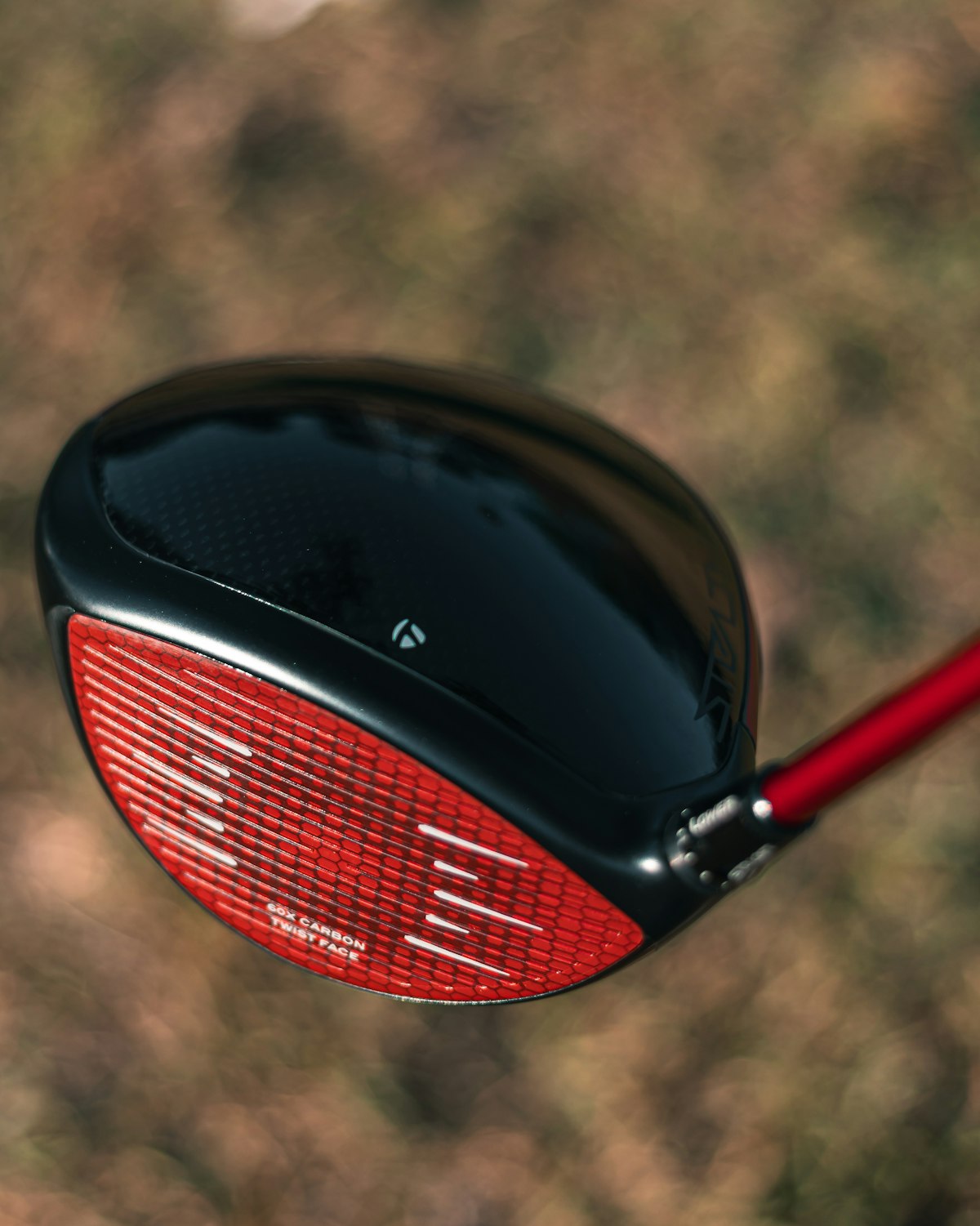
The recreational golfer who walks into a pro shop on a Saturday morning and asks for a new driver will, in roughly nine cases out of ten, end up with a head stamped 9.5 degrees on the sole. He has, in the back of his mind, the rough impression that the pros play 9.5, and that the lower-lofted head is the longer-hitting head, and that the equipment salesman is unlikely to talk him into a higher-lofted club because the higher-lofted clubs do not, in the carpark of the average club, look like the clubs of a player who hits it past his friends. The decision he is about to make is the single most consequential equipment decision in the bag, and is in nearly every case at least two degrees wrong.
What the loft is actually for
The loft on the head of a driver is the design variable that controls the launch angle and the spin rate of the ball coming off the face. Both numbers are, in combination, what produce carry distance. The carry distance, for a swing speed in the range of the average recreational golfer, is maximised at a launch angle in the high teens with a spin rate in the low to mid two thousands. The figures the recreational golfer thinks he wants, taken from the TrackMan numbers of the tour player on television, are a launch angle in the low teens and a spin rate around two thousand. The recreational golfer, with a swing speed around ninety miles an hour and an attack angle that is, on the average swing, negative by two or three degrees, cannot produce those numbers no matter what loft he buys. The 9.5-degree head, on his swing, produces a launch angle around ten, a spin rate around three thousand, and a carry of around two hundred and ten yards. The same player, on the same swing, with a 12-degree head, produces a launch angle around fifteen, a spin rate near twenty-five hundred, and a carry of around two hundred and twenty yards. The ten yards of extra carry is not the trade for anything. It is a strict gain.
The number the pros are actually playing
The other half of the misconception is the part the player has the most attached to. The 9.5 number is the number the pro plays, and the pro is playing it because the pro hits up on the ball by four or five degrees at a swing speed of 115 or more. The positive attack angle adds, on average, two to three degrees of effective dynamic loft to the head at impact. The 9.5-degree head, on the pro’s swing, is producing the same fifteen-degree launch and the same twenty-five-hundred spin that the 12-degree head is producing on the amateur’s swing. The pro is, in effect, playing a 12-degree driver. The amateur, in trying to play the same head, is playing a club whose effective loft is around six or seven, which is the loft of a tour-level three wood.
The number that has, in the last five years, started to spread quietly through the better recreational players is a 10.5 or an 11.5 head with the loft sleeve set up half a degree higher than the stamping. The number behind it is the recognition that the amateur swing produces a flat or slightly downward attack angle, that the dynamic loft is therefore below the stamped loft, and that the dynamic loft at impact has to be in the mid teens for the launch numbers to work. The 9.5-degree head, in this calculus, is the head the player buys when he wants the ball to come out low, hot, and short.
The adjustability sleeve and what to do with it
Every driver sold in 2026 has an adjustable hosel sleeve that, in nearly every case, allows for plus or minus two degrees of loft adjustment without changing the lie or face angle. The player who has bought a 9.5 head and discovered, in the course of an honest hour on a launch monitor, that he is too low and spinning too much, can turn the sleeve to the highest loft setting and recover most of what he gave up at the counter. The player who has bought a 10.5 head can do the same and arrive at an effective 12.5 at impact. The cost of the change is the time it takes to apply a torque wrench. The benefit is the difference between a drive that finds the fairway at two hundred and ten and a drive that finds the same fairway at two hundred and twenty-five.
The argument against turning the sleeve, where it appears, is mostly aesthetic. The plus-two setting makes the face appear slightly more open to the player at address, and the additional loft makes the leading edge sit higher off the ground than the player is used to. The first time the player looks down at the new setup the head will, briefly, look like a different club. The first range session will produce a ball flight that is higher than the one the player has been hitting for a decade. The second range session will produce a ball flight he has been chasing for the same decade. The ego, again, was the only obstacle.
What the launch monitor will tell you
The argument behind this piece is not the kind of argument that can be settled on the carpet at home or on the practice tee at the club. The argument is settled by ten minutes on a launch monitor at any reasonable fitting bay, with the player hitting six balls with his current driver and six balls with the same driver set two degrees higher in the sleeve. The numbers come up on the screen and the conversation is over. The launch angle moves from twelve to fifteen. The spin rate drops by three or four hundred. The carry distance, depending on the player’s swing speed, moves up by anywhere between eight and fifteen yards. The total distance, in nearly every case, follows. The player walks out of the bay having paid nothing, having changed nothing about his swing, and having gained more yards than the new model would have given him for six hundred pounds.
The reason this is not the standard recommendation in the pro shop is, on the part of the shop, mostly commercial. The shop sells more drivers when the player believes the next driver, rather than the next setting on the current one, is the cure for his short tee shots. The reason it is not the standard recommendation in the practice round, on the part of the player’s friends, is, on the part of the friends, mostly social. The friend who sets his loft sleeve to plus two and hits the ball thirteen yards further is not the friend the rest of the group wants to encourage. The recommendation has to come from inside the player’s own honest assessment of what his swing is producing.
The simple test
The simplest test, for the player who does not want to book a fitting, is the carry distance test. The player tees up six balls on a calm afternoon and hits them with a fresh sleeve of premium balls. He notes the carry distance of the best four. If the average carry of the best four is less than ninety per cent of his swing speed in yards (the rough relationship a clean strike of a driver should produce), he is losing distance, and the most likely cause is the launch angle. The most likely fix is two degrees more loft. The fix costs nothing, requires no swing change, and is sitting in the toolbox the manufacturer included with the original purchase.
The driver is, by any reasonable measure, the most expensive club in the bag and the one whose performance most depends on the player’s understanding of what the head is being asked to do. The loft is not the cosmetic detail it has somehow become. It is the variable that decides whether the most expensive purchase in the bag is producing the carry distance the player paid for. Two degrees, in the right direction, is in nearly every case the difference between a driver that is doing its job and a driver that is, very politely, costing the player a stroke a hole.