
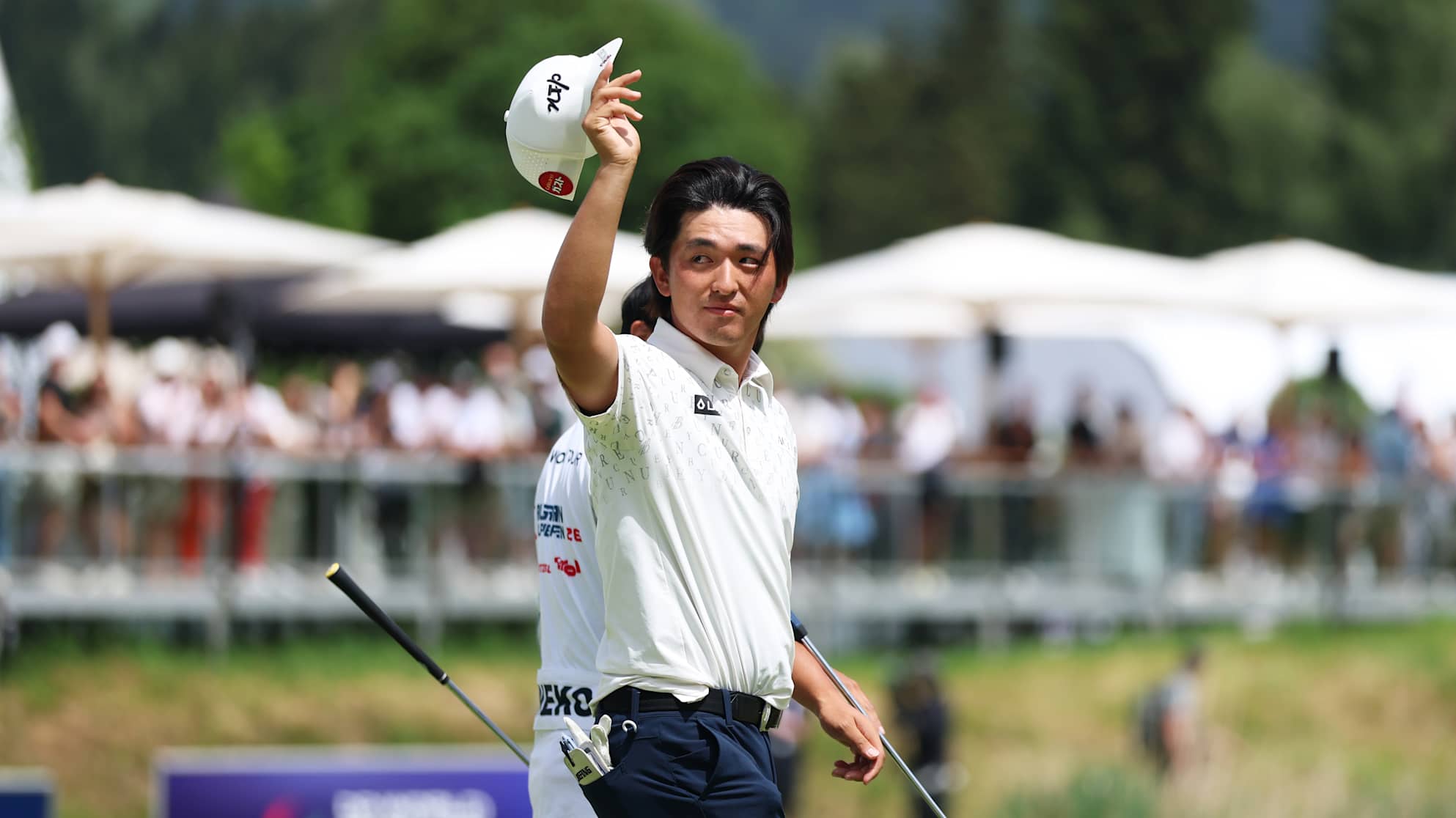
There are wins that arrive on the back of a steady, almost dull procession of pars, and there are wins that turn on a single moment a player will replay for the rest of his career. Kota Kaneko’s first DP World Tour title belongs firmly to the second kind. Standing on the par-three seventeenth at Golfclub Kitzbühel-Schwarzsee-Reith on Sunday, with the tournament still very much in the balance, he played his way into a spot off the green and then chipped the ball straight into the hole for birdie. A two-shot win at eighteen under par, 262, looks comfortable enough on paper. The seventeenth is the reason it ended up reading that way.
A week, and a year, in the making
Kaneko arrived in Austria carrying the particular weight of a player who has been close enough to taste it. The week before, at the Rinkven International in Belgium, he had finished second, the sort of result that is encouraging and faintly maddening in equal measure. A runner-up finish tells a player he belongs without giving him the thing he actually came for. Plenty of golfers let a near miss like that curdle into pressure the following week. Kaneko did the opposite. He turned up in the Tyrol and played four rounds of controlled, purposeful golf, the kind that suggests the second place had taught him something rather than spooked him.
His iron play was the engine of it. On a mountain course where the eye can be fooled by the slopes and the thin alpine air plays havoc with distance control, Kaneko kept giving himself looks from the middle of the green rather than the edges. That is the unglamorous foundation under almost every comfortable-looking win: not a flurry of holed putts, but a long run of approach shots that ask nothing heroic of the putter. By Sunday he had built the platform. The chip-in on seventeen was the flourish on top of it.
The closing 67
A final round of three under par, 67, with the lead to protect, is harder than the number suggests. Leading from the front asks a player to keep making birdies while every instinct is telling him to steer, to play safe, to let the others come back to him. Kaneko found the balance most players spend years learning. He did not go into his shell, and he did not start swinging at flags he had no business attacking. He played the round the course gave him, took the birdies that were on offer, and when the moment came on seventeen to put the result beyond doubt, he had the nerve and the touch to do it.
Two shots back sat Ricardo Gouveia and Davis Bryant, both of whom played well enough to win a lot of Austrian Alpine Opens and simply ran into a man having his week. There is no shame in that, and no obvious mistake to point to. They were beaten by a player who holed a chip when it mattered and who had spent four days hitting his irons closer than anyone else in the field.
The ninth Japanese winner
Kaneko’s victory makes him the ninth Japanese player to win on the DP World Tour, a line that runs back through some seriously good players and speaks to a slow, steady internationalising of European golf that rarely makes the back pages but matters all the same. Japanese golf has produced no shortage of talent over the decades. What it has not always produced is a clear, well-trodden path for that talent to test itself outside Japan and the United States. Every win like this one widens the road a little for the players coming behind.
For Kaneko himself the more immediate prize is the one every first-time winner cherishes, which is the simple removal of doubt. He no longer has to wonder whether he can close. He has done it, on a Sunday, with a lead to defend and a chip-in to seal it, against a field that did not hand him anything. The second place in Belgium looks different now, less a frustration than a dress rehearsal. He went to bed on Saturday night knowing what was at stake and woke up to shoot 67 and win. That is the kind of week a career can be built on.
The Tour moves on quickly, as it always does, and a maiden title buys a player exemptions and confidence rather than any guarantee of what comes next. But Kaneko has the one thing that cannot be coached into a golfer and can only be earned. He has now stood in the fire on a Sunday afternoon and walked out the other side holding the trophy. The chip on seventeen will be the clip that gets shared. The four days of iron play that made it possible are the part he will quietly know mattered most.