
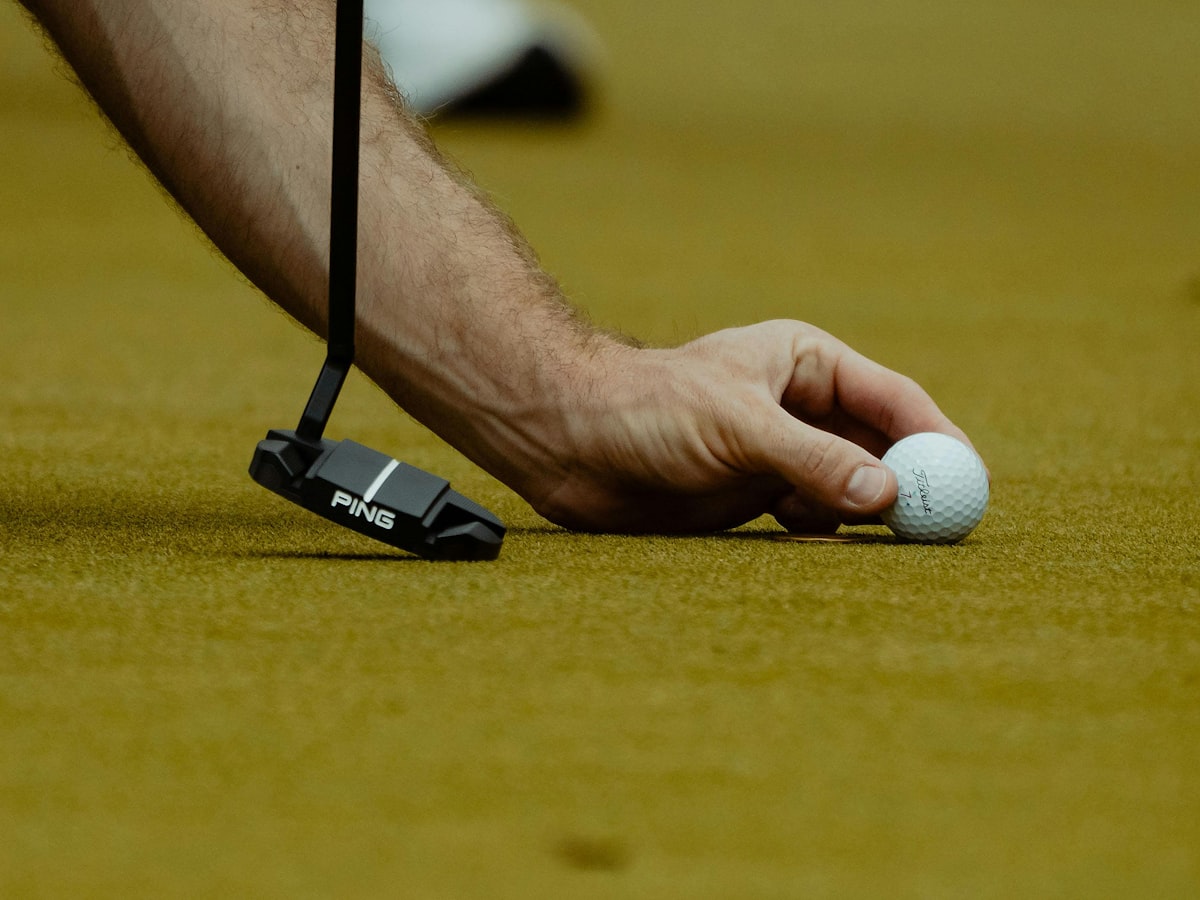
There is a putt that the average amateur faces ten or eleven times a round and almost never practises. The putt is the first putt from a distance the player would not, in any meaningful sense, expect to hole. The shot is the lag, the rolled putt from thirty or forty or fifty feet, the putt whose only job is to leave a tap-in. The shot is the shot that, on the strokes-gained accounting of the average amateur round, costs the player more strokes than any other shot in the bag. The shot is the shot the amateur has, on the practice green before the round, spent the least amount of time on. The shot is the shot the player notices last and complains about least, because the three-putt that comes from a bad first putt feels, in the moment, like a missed second putt rather than a missed first one. It is not. The miss happened on the first putt. The second putt was the consequence.
What goes wrong, and why the player misses what went wrong
The amateur, standing over a forty-foot putt, reads the green. They look at the slope. They notice the right-to-left break. They pick a line two cups outside the left edge. They take their stance, set the putter behind the ball, and roll it. The ball, two-thirds of the way to the hole, breaks across the line the player picked and finishes seven feet past on the high side. The player walks up to the second putt, which is now a seven-foot left-to-right slider with a foot of break, and misses it. The card has a three-putt on it. The player, walking off the green, blames the second putt. They missed a seven-footer. They tell their playing partners they missed a seven-footer.
What actually went wrong, in the strokes-gained terms a Tour coach would apply to the same putt, is that the line was barely the question. The forty-foot putt was a speed putt. The break the player read on the high line was the break the ball was going to take regardless of where it started, because at the speed an amateur typically rolls a forty-foot putt the ball spends a third of its journey decelerating on the back nine of the roll, when the slope has its biggest effect. The reason the ball finished seven feet past was that the player hit it eight feet too hard, which is what the amateur does, on the average forty-foot lag, four times out of five. The eight feet of extra pace produced the seven-footer the player missed. The eight feet of extra pace produced the three-putt. The line, in the strict accounting of it, did not.
The amateur, however, is not equipped to read the round that way. The amateur stands over the second putt, sees a seven-footer, and misses it. They take from the hole the information that they are not a good seven-foot putter. They go to the range, spend the next practice session hitting fifty seven-foot putts, and produce a marginally better strokes-gained number on seven-footers without producing any change in the number of three-putts on their card. The seven-footers, in their game, are not the problem. The forty-footers are. The forty-footers are what they have not practised.
Why speed beats line on the long putt
The fundamental on the lag putt, which the Tour player understands instinctively and the amateur has rarely had explained to them, is that the long putt is a speed shot first and a line shot second. The reason is in the geometry. The hole is four-and-a-quarter inches across. A putt rolled at perfect pace will fall in the hole on a line that is, give or take, the line the player picked. The same putt rolled twelve inches too hard will, at the moment it reaches the hole, be travelling at a pace that no longer allows the break to do its work; the ball will catch a lip and spin off rather than fall. The same putt rolled twelve inches too soft will, at the moment it reaches the hole’s elevation, be travelling at a pace at which the slope still has a lot to say; the ball will turn off the line the player picked and come up short on the wrong side.
The corollary, on the lag putt that is not strictly trying to fall in the hole, is that the speed determines what comes next. The putt that finishes within three feet of the hole leaves a putt the average amateur holes seventy per cent of the time. The putt that finishes seven feet past leaves a putt the average amateur holes about half the time. The four feet of speed difference, on the first putt, is the entire difference between a two-putt and a three-putt. The line, on the first putt, can be off by half a cup and the second putt is still a kick-in. The speed cannot be off by even a fraction of a club’s worth of pace.
The drill: target a tee, not the hole
The drill the Tour player runs on the practice green, and the drill the amateur should run before every round they take seriously, is the drill the amateur will not have done in a season of practice. The drill is to take three balls to a spot on the practice green forty feet from a tee that has been pushed into the green. Not from a hole. From a tee. The instruction the player gives themselves is to roll each of the three balls and have them stop within a circle a putter-head wide around the tee. The drill is not about holing anything. The drill is about producing a roll whose pace is correct enough that the ball would, in a real round, stop close to the hole.
The reason the drill uses a tee rather than a hole is that the hole, in practice, gives the player a target the brain interprets as a thing to be hit. The amateur, putting at a hole on the practice green, rolls a slightly firmer putt to give the ball a chance to fall. The tee gives them no such instinct. The tee is a mark to stop next to. The drill removes, in one small change of target, the unconscious bias toward hitting the long putt firmly.
The number to look for, after three balls, is whether all three finished inside a putter-head of the tee. If they did, the player has produced the speed they would want on the course. If two of them did and one of them rolled six feet past, the speed is still wrong on one of them and the player has work to do. The drill is to do the drill ten times, from ten different distances, before going to the first tee. Twenty minutes of it, twice a week, in the month before a season the amateur cares about, will move the player’s three-putts per round from somewhere near two to somewhere near zero.
What changes in the round
The change the player will notice, on the first round after a month of the drill, is not a change in their reading of the greens. The change will be that the first putt finishes near the hole. The second putt is a tap-in. The card no longer has a three-putt on it from the eighth, where the first putt ran eight feet past, or from the twelfth, where the same thing happened. The number on the bottom of the card has come down by two or three shots, and the player cannot quite say where the shots came from. The shots came from the lag putts. The lag putts were the shots the player had been giving away. The lag putts were the shots the player had not been practising. The drill, on the tee on the practice green, was the small change that brought them back.
The amateur game, on the strokes-gained accounting of where its lost shots are, gives back more strokes from forty feet than from any other distance on the course. The player who fixes the lag putt, even a little, fixes the part of the game that is costing them the most. The fix is twenty minutes a week at a tee in the practice green. The fix is not on the range. The fix is not in a lesson. The fix is in the round the player walks the first putt up to within a putter-head, instead of seven feet past. The second putt, which the player has been blaming for the season, is no longer in the conversation. The first putt has carried the round.