
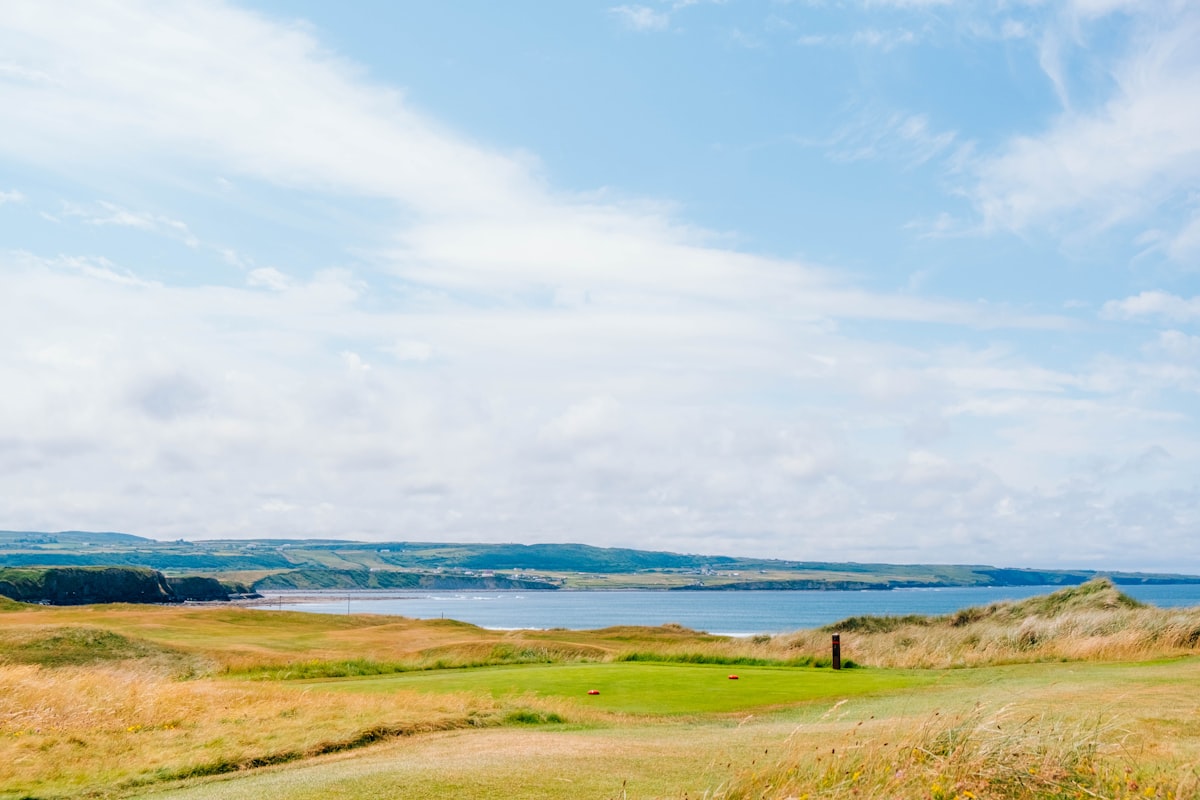
There are golf courses that get discovered by the wider game and golf courses that simply carry on regardless, and for most of its 134 years Lahinch has been the second kind. Tucked into the northwest corner of County Clare, where the Atlantic weather arrives with nothing in front of it to slow it down, the Old Course has been quietly regarded by the people who actually play it as one of the finest links tests anywhere, while the wider golfing world caught up in fits and starts, a 2019 Irish Open here, a Golf Digest ranking there. This year it hosted its first Walker Cup, and for a few days in September the rest of the world finally paid the kind of attention that Lahinch members have taken for granted for over a century.
Old Tom, then Mackenzie, then leave well alone
The course that exists today is really the product of two very different eras of design thinking, laid one on top of the other with unusual success. Old Tom Morris arrived in 1894, two years after the club’s founding, and was reportedly so taken with the terrain that he predicted the finished course would rank among the best links in the United Kingdom. He was not wrong, though it took Alister MacKenzie’s 1927 redesign, undertaken for a fee of two thousand pounds, to turn a promising piece of dune land into the strategic puzzle that survives largely intact today. MacKenzie’s fingerprints are all over the greens in particular, contoured enough to punish an indifferent approach without ever feeling manufactured, which was always his stated aim and rarely his actual result elsewhere. At Lahinch it worked. A more recent renovation by Martin Hawtree between 1999 and 2003 re-routed four holes and added new tees and bunkering without disturbing the character MacKenzie left behind, which is the harder trick in golf course architecture and the one Lahinch has managed twice now.
The two holes everyone argues about
No conversation about Lahinch avoids its blind shots for long, and the two most argued over are the par-3 fifth, the Dell, and the par-5 fourth, Klondyke. Both ask the player to hit toward a green they cannot see, guided only by a painted stone marker on the horizon, which is either the most charming piece of golf architecture in Ireland or an outdated relic depending on which side of the debate you land on. MacKenzie himself reportedly wanted both holes removed during his redesign and was overruled by the membership, and nearly a century later that membership has been proven right in the way that only tradition can be proven right, by simply outlasting every argument against it. Playing the Dell for the first time, blind over a dune to a green you are told rather than shown is there, remains one of the more disorienting experiences in golf, and one of the more memorable.
A links that plays as hard as the weather allows
What separates Lahinch from a course that is merely photogenic is how completely the wind dictates the round. The front nine runs out toward the sea and the back nine turns for home, a fairly standard links routing on paper, but the exposure at Lahinch is total. There is very little in the way of tree cover or elevated dune protection on several holes, which means a calm morning and a blustery afternoon can turn the same course into two entirely different examinations within a single day. The par-4 fourth and the closing stretch along the coast are where this is felt most, wide fairways that stop looking wide the moment the wind picks up and a bad miss becomes a genuinely difficult recovery rather than an inconvenient one. Course management at Lahinch is less about attacking pins and more about picking the shot that survives contact with the conditions, which is precisely the kind of golf a links is supposed to demand and modern target golf rarely does.
Goats, and a claim to being Ireland’s St. Andrews
Any profile of Lahinch eventually has to mention the goats, because the club does so itself, with real affection rather than the usual tourist-board reluctance. They have wandered the Old Course since long before anyone thought to put one on the club crest in 1956, originally belonging to a caddie who lived nearby, and they remain there today, a small piece of living tradition that would feel forced anywhere else and feels entirely natural at Lahinch. The nickname “St. Andrews of Ireland” gets attached to the club often enough that it has become shorthand rather than boast, and after a Walker Cup week that brought GB&I its first win in the fixture since 2015, on a course that has hosted amateur golf continuously since the South of Ireland Championship began in 1895, the comparison feels less like marketing and more like an overdue acknowledgment of a course that never needed the attention to know what it had.