
The pace-of-play conversation, in the modern amateur game, has reached the kind of saturation point at which it has stopped being a conversation about a problem and started being a conversation about a feeling. Every social media post about a slow Sunday tee sheet, every range-line muttering about the group ahead, every ranger driving a cart with a slightly grim expression, sits inside the same low-frequency complaint that the round used to take four hours and now takes five. The complaint is rarely interrogated. It is taken, by most of the people who voice it and most of the people who hear it, as obviously true. I would like to suggest that most of it is misdirected, and that the actual problem is not the time the round is taking. The actual problem is what the conversation about time has done to the way the round is being played.
A four-and-a-half-hour round is, on most reasonable courses, the correct amount of time for four players to play eighteen holes of golf at a thoughtful pace. The professional Tour rounds, for foursomes in major championships, take between five and a half and six hours. The competitive amateur events the same player base watches and aspires to take five hours on a slow day. The amateur foursome on a Sunday morning at a public course is not a Tour round, and it is not a championship round, and it does not have to be played in three hours and forty minutes to be respectable. The figure that has become embedded in the modern conversation as the standard — somewhere between three hours and four — comes from a particular kind of nine-handicap who has played at the same club for thirty years, who knows the course in the way the player knows their own kitchen, and whose foursome is composed of three other players who play it the same way. That round is a beautiful thing. It is not, in any sensible sense, what most golfers should be measuring themselves against.
What the conversation has done to the round
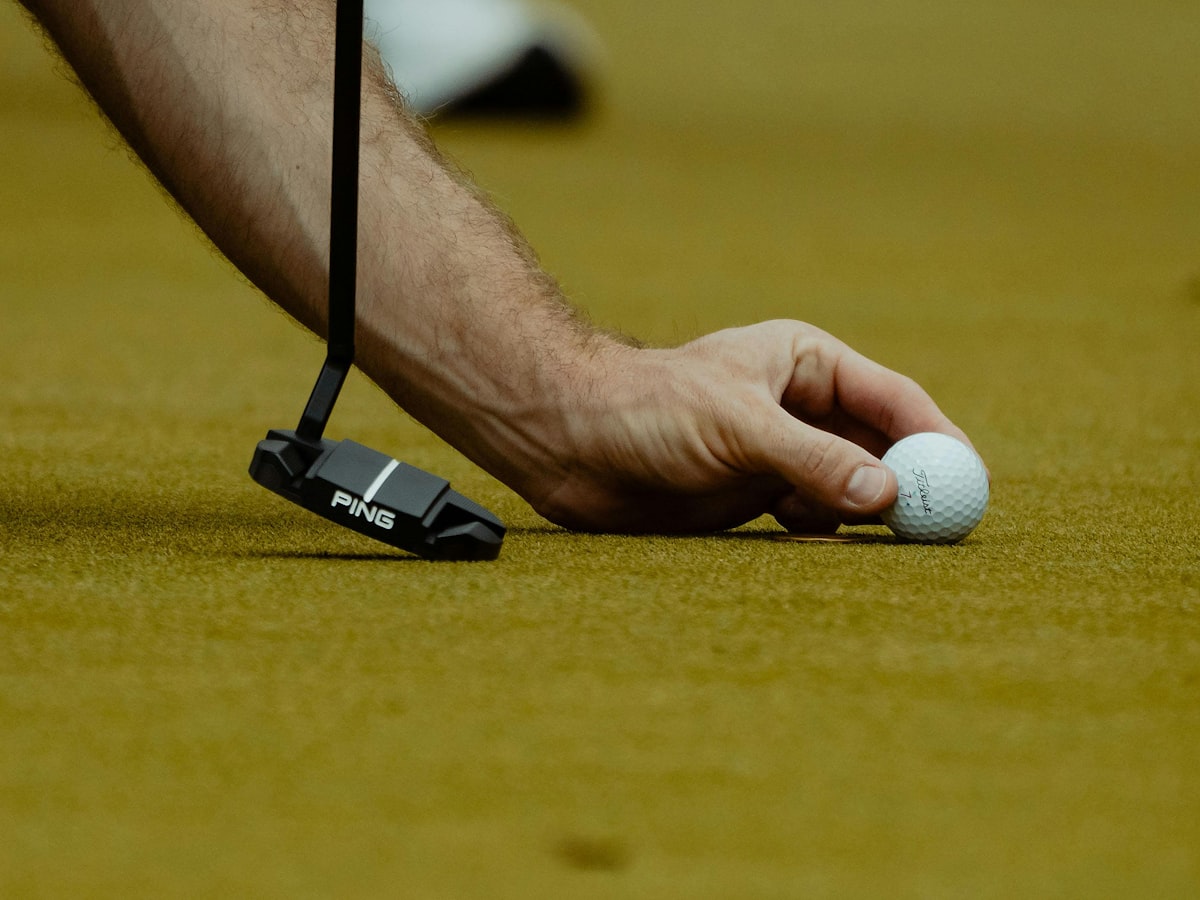
The first casualty of the modern pace obsession is the pre-shot routine. The player who has been told, by every Twitter thread and every grumpy ranger they have encountered in the last decade, that the round is too slow, is the player who has stopped reading the green. They have stopped feeling the wind. They have stopped picking the club for the shot in front of them and have started picking the club they hit hardest and most reflexively. The result is, paradoxically, a slower round. The chunked wedge from the wrong club, the four-foot putt that becomes a six-foot putt because the line was read in five seconds, the second drop because the first ball was hit before the player had any business being over it — these are the actual time losses on the modern amateur Sunday. They are produced, almost exclusively, by the anxiety that the round is supposed to be quicker than it is.
The second casualty is the walk between shots. The player who is worried about pace plays from the cart. The cart is, in most amateur rounds at most American resort courses, the slower option, because it forces the players to wait for each other to finish a hole before the cart can move to the next tee, because it concentrates the foursome into two clusters of two rather than four players moving at their own pace, and because it removes the half-minute of decompression that the walk to the next shot provides. The walked round is, at most courses, four and a half hours. The driven round, on the same course, is five hours and fifteen minutes. The pace conversation has, for a generation of weekend golfers, pushed them into the cart on the grounds that walking would be slower. The reverse is true. The walk is the only place in the round where the player thinks about the shot they have just hit before they prepare for the shot they are about to hit. Removing it has produced a slower, worse, less considered round.
Where the time is actually going
There are real pace problems on amateur tee sheets. They are not the things the conversation usually mentions. They are, in roughly descending order: tee sheets that have been packed by the course at seven-minute intervals when the course can only support nine-minute intervals; ranger interventions that, by interrupting the rhythm of a group that was about to settle into its pace, produce a longer round than the one the ranger was trying to prevent; the fourth player in the group searching the wrong side of the fairway for a ball that is sitting in the first cut on the opposite side and which would have been found in thirty seconds if anyone had watched it; the par-five three-shot recovery from a fairway bunker that the player has not committed to laying up out of; and the four-foot putt that has become a six-foot putt that has become a three-putt because the player tried to play “ready golf” before they were ready. None of these are solved by the player feeling worse about how long the round is taking. They are solved, in roughly the same order, by better tee-sheet management, by rangers who walk the course rather than driving it, by a culture in which everyone watches the player who has just hit a shot, by the layup that the modern conversation looks down on, and by the player taking the four extra seconds to read the green properly the first time.
The defence of the unhurried round
The thing the modern pace conversation has lost sight of is that the round is not the bus. The round is not, in any meaningful way, the thing the player is trying to finish. The round is the thing the player has come to do. The pleasure of it, the part of the game that distinguishes it from the other Saturday activities, is the four and a half hours of being out on the course with three friends, the unhurried walk between shots, the small social interactions on the tee, the half-minute spent reading the green, the careful look at the lie before the layup, the quiet pleasure of the well-struck eight-iron from a yardage the player has thought about. The conversation that wants this experience to be three hours and forty minutes long is the same conversation that wants the meal to be a protein bar in the car. The shortening of the round, in pursuit of a feeling that the player is being respectful of the foursome behind them, has produced a round that the player does not enjoy as much, that the player does not score as well at, and that the player, by the time they have walked off the eighteenth green, would not particularly like to repeat the next weekend.
There is a version of the pace conversation that is worth having. It is the conversation about tee-sheet density, about ranger culture, about the half-handful of habits — watching the ball, walking with intent, preparing on the way to the shot rather than at the shot — that produce a meaningful pace improvement without any reduction in the quality of the round. None of these involve the player feeling that the four-and-a-half-hour round is a moral failing. The next time you find yourself on a course with a group that is taking the right amount of time to read greens, walk between shots, and play the shots in front of them at a pace that lets them play the shots well, give them the half-minute they need. The round behind will be slightly longer. The round itself will be considerably better. The pleasure of the game depends on it.