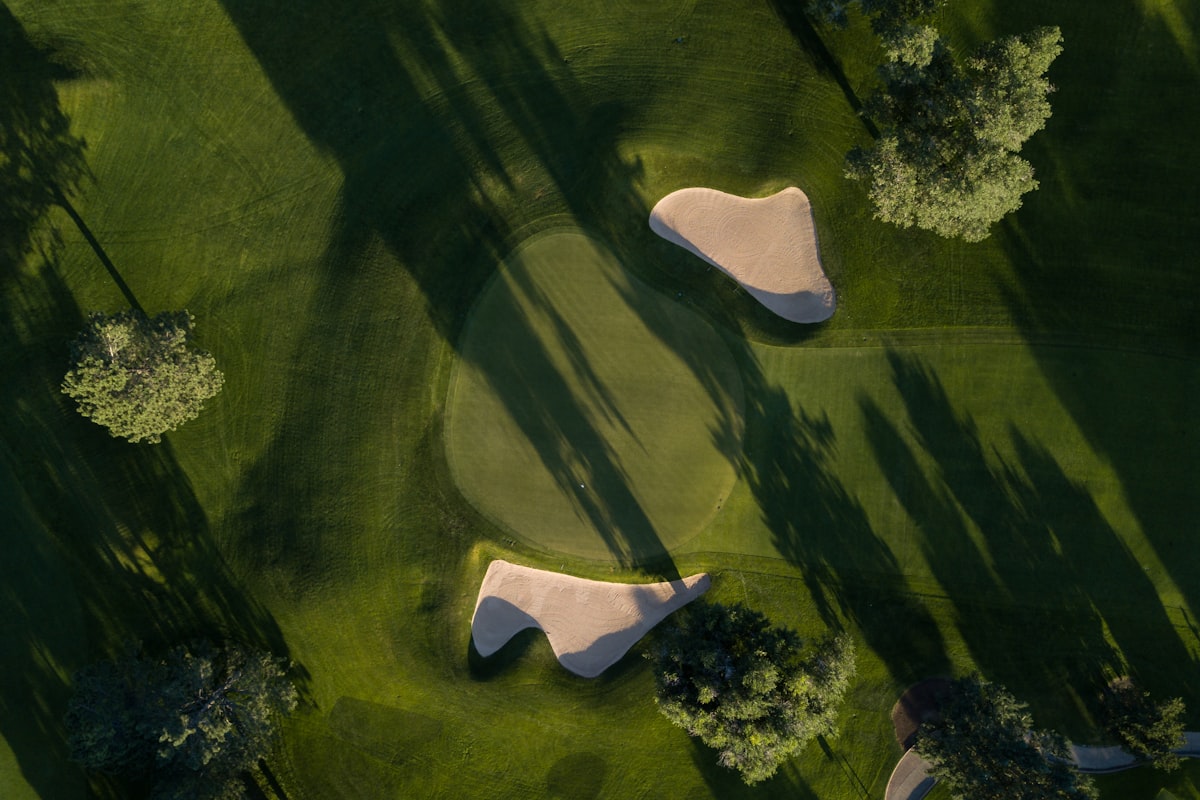
There is a particular kind of hush that settles over a player the first time they walk onto the first tee at Pinehurst No. 2. It is not the reverent quiet of Augusta or the sea-wind drama of Pebble Beach. It is something drier and more unsettling. The course feels stripped back, almost indifferent, as if the architecture is daring you to find the trouble before it finds you. That is the Donald Ross effect, and ninety years after he finished the routing for the final time he continues to be the sharpest teacher in American golf.
A short history of a deceptively simple course
Ross began work on No. 2 in 1907, shaping and re-shaping it until the late 1940s. He lived on the property for decades and used the course as a laboratory for ideas about crowned greens, angles of attack, and the value of making the obvious shot the wrong shot. The result is a layout that has almost no blind approaches and almost no water, and yet manages to examine a player more thoroughly than any championship venue in the country.
The restoration by Coore and Crenshaw in 2010 was the event that returned the course to the conversation about the great courses of the world. They took out around forty acres of rough and replaced it with hardpan sand, wire grass, and the pine needles that give the area its name. What had become a lush, overwatered, rough-framed examination turned back into something that looked a little unkempt and played entirely differently. The firmness came back. The bounce came back. Players who had started flying the ball high and stopping it on a spot suddenly had to think about which side of the fairway would feed a mid-iron into which side of the green.
The greens
Ross was obsessed with the greens at No. 2 and kept tinkering with them into his eighties. They are famously crowned, which is a word that sounds technical and is really just a way of saying that the ball rolls off the edges if you do not land it with something like perfect judgment. Miss a green by a yard at Pinehurst and you often do not end up in a greenside bunker or a thick lie in the rough. You end up fifteen yards away in a tight, shaved swale, looking at a pitch that has to carry a particular ridge and then stop on a surface that is sloping away from you.
The fourteenth is probably the most talked-about example. A short approach on paper, but the green has so much movement that a ball landing three feet off its intended line can end up forty feet from the hole, and a ball landing on the intended line can still end up there if the player does not commit to the flight. The fifth, the ninth, and the sixteenth are all studies in the same principle. The greens reward precision but they also reward imagination, and the great Pinehurst rounds are almost always built on an ability to read the slopes around the green rather than just the green itself.
How it plays for a club golfer
The honest answer is that it plays firm, exposed, and relentless. You can find your ball almost everywhere, because the sandy waste areas are largely playable, but the shot from that waste area is often a lot harder than it looks. The wire grass grabs the club in unpredictable ways. The lies are inconsistent. The approach, if there is one, is usually longer than the one you would have had from a slightly narrower fairway, because the wide sand corridors tempt a tee shot that finds the wrong angle.
A single-digit handicap will walk off the course tired but satisfied. A mid-handicap will walk off with a card that looks about eight shots worse than they expected and a deep respect for the place. There is almost no recovery shot that involves a hack-out into deep trouble, because the trouble is shallow and wide and everywhere. Instead the recovery is nearly always about reading a slope and deciding whether to fly it or bump it, which is the purest form of golf thinking and also the kind of thinking most of us are not very good at.
Why it still matters
There are longer courses than Pinehurst No. 2. There are more dramatic ones. But there is no course in the country that does more with less water, less bulldozing, and fewer gimmicks. When the USGA came back to the property for the 2024 US Open, the test was not about length, it was about who could land the ball on the correct third of a crowned green on a hot, dry afternoon. That is exactly what Ross was trying to build nearly a century earlier.
The other thing about Pinehurst, for anyone lucky enough to travel there and play it, is that the rest of the village rewards the trip. You walk out of the clubhouse into a resort that still feels like a golfing village rather than a marketing exercise, and you can get a beer at the Pine Crest Inn and talk about the shots you wasted at the fourteenth without anybody pretending the course was unfair. Because it was not. It was exactly what it has always been, and most of the time that is more than any of us can really handle.
If you are picking one destination course to play in the southeastern United States and you can only play one, play this one. It will make your regular home course feel like a driving range, in every sense of the word.