
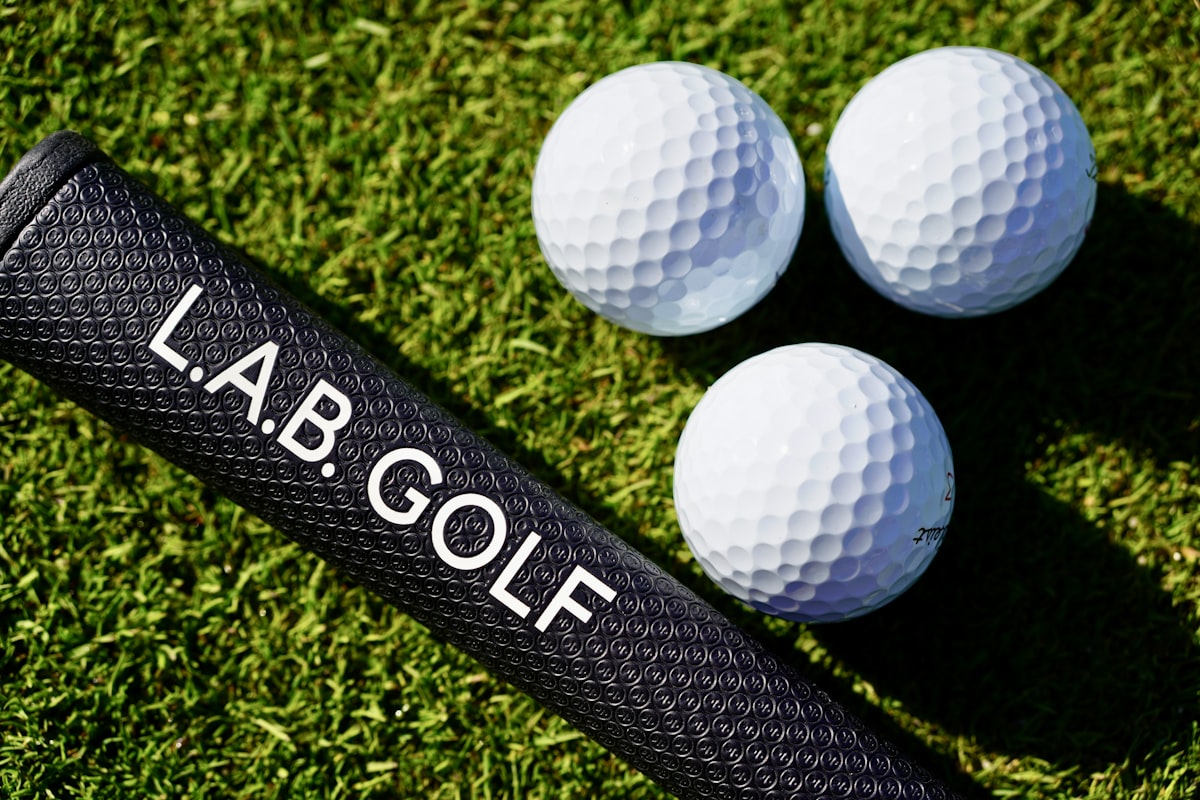
There is a specific kind of amateur golfer who will spend three thousand dollars on a new set of irons, eight hundred on a putter fitting, and four hundred on a rangefinder, and who has been playing the same set of grips for six years. The grips have gone shiny on the sides where the lead hand sits. The cap on the top of the driver has worn smooth. The ribbed reminder on the underside has flattened out into something that no longer reminds anybody of anything. The player notices, in some peripheral way, that they are gripping the club a little tighter than they used to. They put it down to age, or to nerves, or to the fact that the clubs are clearly fine because they paid for them in 2019.
Grips are the most under-thought piece of equipment in the bag, and they are the cheapest meaningful upgrade an amateur can make. A full regrip, including labour, costs less than a single fitted putter. The difference it makes to a swing that has been quietly fighting an old set of grips for two seasons is, in the right cases, the difference between a high-handicap round and a low one. What follows is a practical guide to when to replace your grips, how to choose the right ones, and why most golfers leave the job until two seasons too late.
How to tell your grips are gone
The simplest test is the one most amateurs never do. Pick up a club from the bag and hold it lightly, the way you would normally take your address grip. Now squeeze. If the leather or rubber compresses noticeably under pressure, the grip is in good condition. If the surface feels firm and slick, like a smoothed pebble, it is past replacing.
A more thorough version of the same test is to look at the grip in the daylight. Hold it under a window. The wear pattern of the lead hand should produce a faint discolouration where the thumb sits and a slight darkening along the bottom of the grip, where the heel pad applies pressure. If those areas have gone shiny, the grip’s surface texture has been worn off, and the only thing keeping the club in your hands during the swing is grip pressure. The harder you have to grip, the slower your swing goes, and the more tension you carry into impact. This is the slow tax that old grips collect over a season, and the player paying it is rarely aware that they are paying it.
The other thing to look for is the cap on top of the grip. A worn cap means the player has been adjusting their lead hand at the top of the swing, which is typically a sign that the grip has stopped giving them a stable reference point. New caps are firm and slightly tacky. Old caps go glossy, and the centre dimple flattens. When the cap is gone, the rest of the grip is gone with it, even if the body of the grip looks more or less intact.
The last test is the one nobody likes. If the grip leaves a dark, faintly oily residue on a clean white cloth when wiped down with warm water, it has been holding hand oils for so long that it has become its own surface, and no amount of cleaning will recover the original tackiness. New grips do not do this. Old grips do.
When to replace, and how often
The accepted wisdom is that grips should be replaced every forty rounds, or once a year, whichever comes first. The accepted wisdom is roughly correct, with two refinements.
The first refinement is that range balls count. A bucket of fifty range balls puts the same number of impacts on the grip as a round of golf does, sometimes more, because the practice swings outnumber the on-course shots. A player who hits a small bucket twice a week and plays once a week has put forty rounds of wear on their grips by the end of June, not the end of the season. The grips will need replacing before most amateurs would think to.
The second refinement is climate. Golfers who play in hot, humid conditions, or who sweat heavily, wear out grips faster than golfers who do not. The hand oils that turn old grips into miniature ice rinks are produced in greater quantity by the same hands that play summer golf in Florida than by the hands that play winter golf in Yorkshire. A florida golfer should think in terms of replacing twice a season. A Yorkshire golfer can usually get a season and a half out of a fresh set if they store the clubs indoors and wipe the grips down occasionally.
Choosing the grip
The temptation, once a player decides to replace their grips, is to walk into the shop and choose whatever the most popular tour grip is. There are worse approaches. There are better ones. The four variables that matter, in roughly this order, are size, material, texture, and weight.
Size is the most important. A grip that is too small for the player’s hand encourages the bottom-hand to fight the top-hand through impact, which produces a closed face and a hooked ball flight. A grip that is too large reduces wrist hinge through the swing, which is sometimes a desirable thing for chronic over-cookers and almost always a bad thing for everyone else. The standard test is to take a normal grip and see whether the middle finger of the lead hand just touches the palm under the thumb. If it does, the grip is the right size. If the finger curls past the palm, the grip is too small. If it cannot reach, too big. Most amateurs are playing grips a half-size smaller than they should be.
Material is next. Rubber grips are the cheapest, the most consistent, and the easiest to replace. Cord grips, which have a thread of cotton woven through the rubber, are firmer and more durable in wet conditions, and they are the right choice for sweaty hands and humid weather. Hybrid grips, which are cord on the upper half and softer rubber on the lower half, are increasingly the default tour choice, and for good reason: the cord stays gripped under pressure, and the softer lower section absorbs more impact through the bottom hand.
Texture is third. Heavily textured grips, sometimes marketed as “wrap” grips, are forgiving of poor grip pressure but tend to mask feedback at impact. Smoother grips give clearer feedback but require the player to maintain even pressure throughout the swing. Most mid-handicap players are best served by a moderate texture: enough surface to inform the hands without enough to disguise a thinned strike.
Weight is the variable nobody thinks about. The grip is the lightest part of the club, but it is also the part that swings through the smallest arc. A heavier grip, all things equal, slightly slows the head and changes the swing weight of the club, which can be useful for players who tend to release early. A lighter grip does the opposite. The default is fifty grams, which is the weight that most clubs are built to. Switching to a 60-gram or 40-gram grip without compensating elsewhere will change the feel of the club enough that the player should hit balls before deciding it was the right move.
What it costs
A standard rubber grip costs around eight dollars. A cord or hybrid grip costs around twelve. Labour at most pro shops runs another three to five dollars per club. A full set of fourteen clubs, regripped at moderate cost, comes in under two hundred and fifty dollars. The same player will think nothing of spending five hundred on a single new wedge. The arithmetic is upside-down, and the player who flips it is the player who will most reliably take a stroke off their handicap for the smallest cash outlay in the game.
There is no piece of equipment in golf with a better return on investment than a fresh set of grips. The clubs do not need to be new. The shafts do not need to be new. The heads do not need to be the latest model. The grip is the only part of the club that touches the player, and replacing it on schedule is the single most reliable way to keep your hands and your swing on speaking terms with each other. Make a note of when your grips were last replaced. If you cannot remember, that is your answer.