
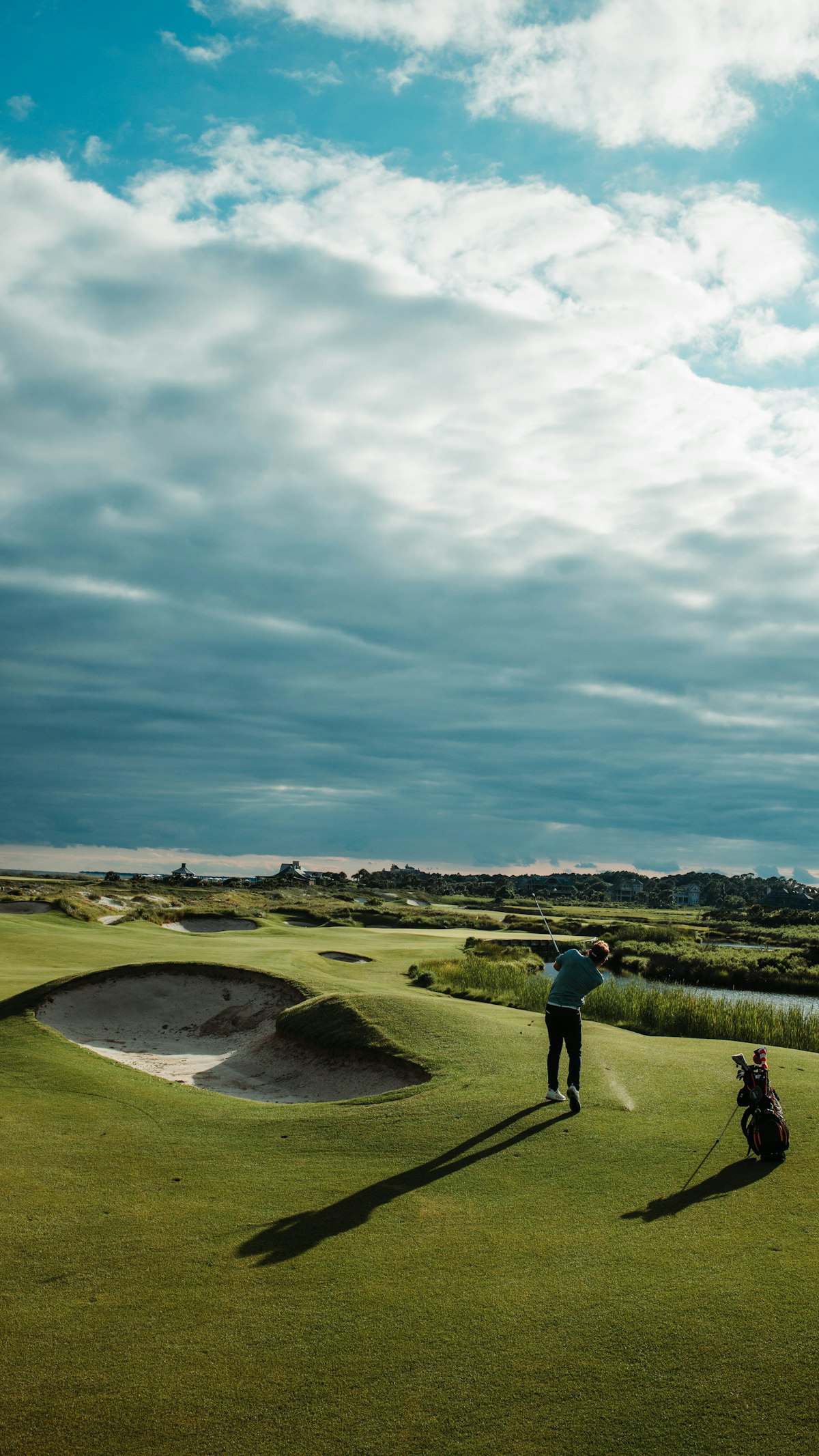
There is a stretch of road on the way into South Pittsburg, Tennessee, that gives no hint of what is waiting at the end of it. The town sits in the Sequatchie Valley, close enough to the Alabama and Georgia state lines that the drive feels like it belongs to all three, and the final approach to Sweetens Cove winds through country that looks built for cattle rather than golf. Then the gate appears, the parking lot fills with cars wearing licence plates from a dozen states, and nine holes of some of the most argued-about golf architecture in the country open up in a valley that, by any sensible measure, should never have produced them.
From a substandard farm course to a design manifesto
Sweetens Cove did not begin as anything special. A course called Sequatchie Valley Golf and Country Club had occupied the 135-acre site for decades, unremarkable land that nobody mistook for a canvas. That changed in 2011, when Tennessee local Rob Collins and his design partner Tad King were hired to renovate it, working on what amounted to a shoestring budget with no reputation yet to trade on. Rather than tidy up what was there, Collins and King moved enormous volumes of earth to build something new entirely, digging out low points and piling up ridges, in one case raising a section along the second hole by a couple of dozen feet from what had been a natural low spot. It opened in 2014 as a nine-hole course of only around 3,300 yards, with fairways that in places stretch close to a hundred yards wide, and it announced itself as a course built entirely around options rather than punishment.
The most cherished hole carries a personal debt in its name. The par-3 fourth, semi-blind off the tee to a green that runs some ninety yards from front to back, is called King, after King Oehmig, the Tennessee golf figure who first pointed Collins toward the derelict site and the job that came with it. Play to the front of that green and it is a simple wedge with a benign bank feeding the ball toward the hole. Play to the back and it becomes a mid-iron that must land soft and precise, effectively a different golf hole wearing the same tee box. Sweetens doubled down on that idea a few years after opening, cutting two pins on every green rather than one, a practice that began for a single exhibition event and never stopped because it let golfers on their third or fourth loop of the day discover a hole they thought they already knew.
Bankruptcy, Twitter, and an unlikely rescue
None of the acclaim came quickly or cheaply. For the better part of five years after opening, Sweetens Cove was in genuine financial peril, kept alive by what people around the club still describe as a series of small, last-minute interventions rather than any stable business plan. What saved it was not a marketing budget but word of mouth, images and impassioned arguments about the course spreading across golf blogs and social media until it became, by most accounts, the first golf course to build its reputation almost entirely on the internet. The New York Times eventually noticed. So did a group of investors that included tennis player Andy Roddick and former NFL quarterback Peyton Manning, who joined an ownership group in May 2019 that finally gave the little nine-holer some financial footing after nearly a decade of near-misses.
The favourite hole for most regulars is the fifth, a drivable par-4 of just 283 yards that follows directly after the King hole and asks a different kind of question. The fairway can push a hundred yards wide, and the ideal line depends entirely on which of the two pins is cut that day, with a lone bunker guarding the front acting as the round’s single genuine hazard on the hole. It sits alongside a 582-yard par-5 third, the longest hole on the card, where a single centreline tree in front of the green forces a decision on every approach: over it, around it, or accept the longer look from underneath it. The course’s other real teeth show up at the sixth, a par-4 bending around a water hazard that is the one place on the property where a golf ball can be lost for good, a rarity on a course built more around creative recovery than punishment.
What is coming next
Sweetens Cove is no longer just a nine-hole curiosity trying to survive. Public golf but not cheap golf, with nine-hole rates in the thirty-five to forty-five dollar range and unlimited-play daily passes that regularly sell out within minutes of release, it has become one of the hardest tee times in the country to actually book. This year brought a fresh chapter: an investment from Reef Capital Partners, alongside the existing ownership group of Collins, Roddick, Manning and others, broke ground on a thirteen-hole short course designed to interweave with the original nine, along with plans for cabin-style lodging, a restaurant, and a putting green large enough to host its own gathering, all aimed at turning a single round into a weekend. The short course is due to open in the summer of 2027, with the lodging following in phases after that.
What has not changed, and what the new investment is explicitly built to protect, is the thing that made people care about Sweetens Cove in the first place: a scruffy nine-hole course on land nobody thought much of, turned into something that rewards a second and third look more than the first one. The valley that seemed to promise nothing in particular on the drive in is still doing exactly what it has done for a decade, quietly making the case that great golf has very little to do with how much land you start with.