
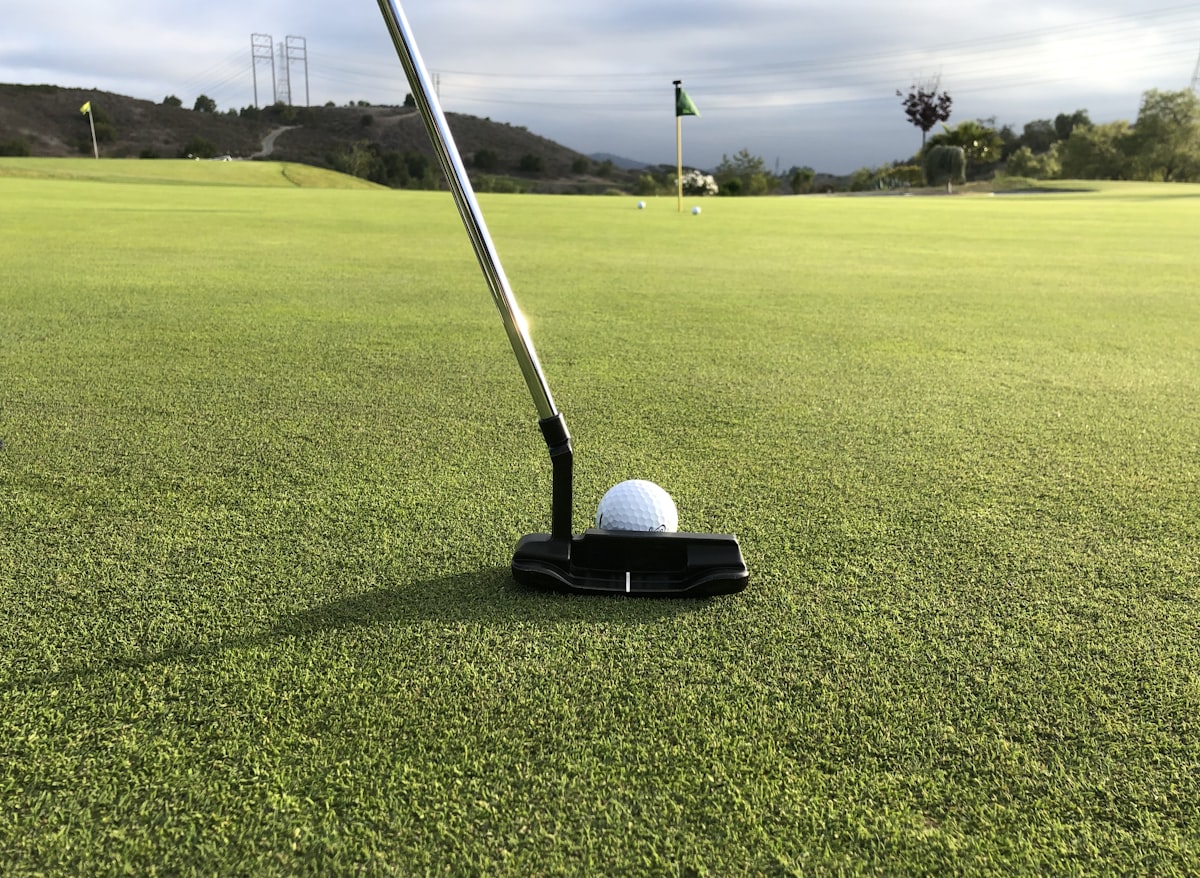
Ask most club golfers what costs them the most shots and they will point to something dramatic: the drive that finds the trees, the approach that comes up short and wet, the three-putt from forty feet. Rarely does anyone mention the putt from six feet, and yet it is the one that shows up most often and matters most when it does. It is the putt for par after a good approach, the putt to save a hole after a scrambling chip, the putt that turns a bogey into a double if it is missed. Nothing else on the course has such a direct line to the number you write down.
Why this length is different
Inside three feet, most reasonable players hole the putt more often than not, and the margin for technical error is small enough that confidence tends to carry you through. Past fifteen feet, the target shifts from the hole to a general area, and a putt that finishes two feet away is a good result rather than a disappointment. Six feet sits in the uncomfortable middle. It is close enough that missing feels like a failure, and far enough that the line, the speed, and the read all have to be right at once. That combination is exactly why it is where amateur scorecards quietly come apart.
What actually goes wrong
Watch a club player over a six-footer and the fault is rarely the stroke itself. It is the read, made in a hurry because the walk from the fairway or the previous hole has already used up the patience for a proper look, and it is the speed, because a putt struck to die at the hole gives itself the whole cup to work with while a putt rammed at the back of the hole only has the width of the ball. Add the fact that six feet is exactly the distance where a player starts thinking about the putt back if they miss, and the whole process speeds up under a kind of pressure that a three-footer never creates and a thirty-footer never has time to build.
A practice habit worth stealing
The fix is not a new stroke. It is a different use of practice time. Most golfers on a putting green gravitate to either very short putts, which flatter the ego, or long lag putts, which are satisfying to roll but rarely decisive. Set up instead with six balls at six feet, from six different angles around one hole, and putt them in order without resetting. The angles matter more than the repetition. A six-footer from above the hole asks a different question than one from below it, and most amateurs have only ever practised the uphill version because it is the one that feels safest to leave short. Rotate around the clock face and the putt stops being a single shape you have grooved and becomes a read you have to make fresh each time, which is a far closer match to what actually happens on the course.
Speed still comes first
None of this replaces the basics of good speed control. A six-footer struck at the right pace can wander slightly off line and still catch the edge of the hole, while a putt on a perfect line but hit too firmly will burn the edge and carry on past. The habit worth building on the practice green is to pick a spot roughly a ball’s width past the back of the cup and try to have the ball finish there if it misses, rather than aiming to smash it through the break. That single adjustment, applied specifically at this length, tends to do more for a scorecard over a season than any amount of work on the driver.
The number that actually moves
Track your six-foot putts for makes and misses over a handful of rounds and the pattern usually surprises people. It is rarely the long putts that separate a good round from a mediocre one. It is how many of these mid-range putts for par, or to save a hole, actually go in. Give this length the attention it deserves on the practice green, and the scores tend to follow without any other part of the game needing to change at all.