
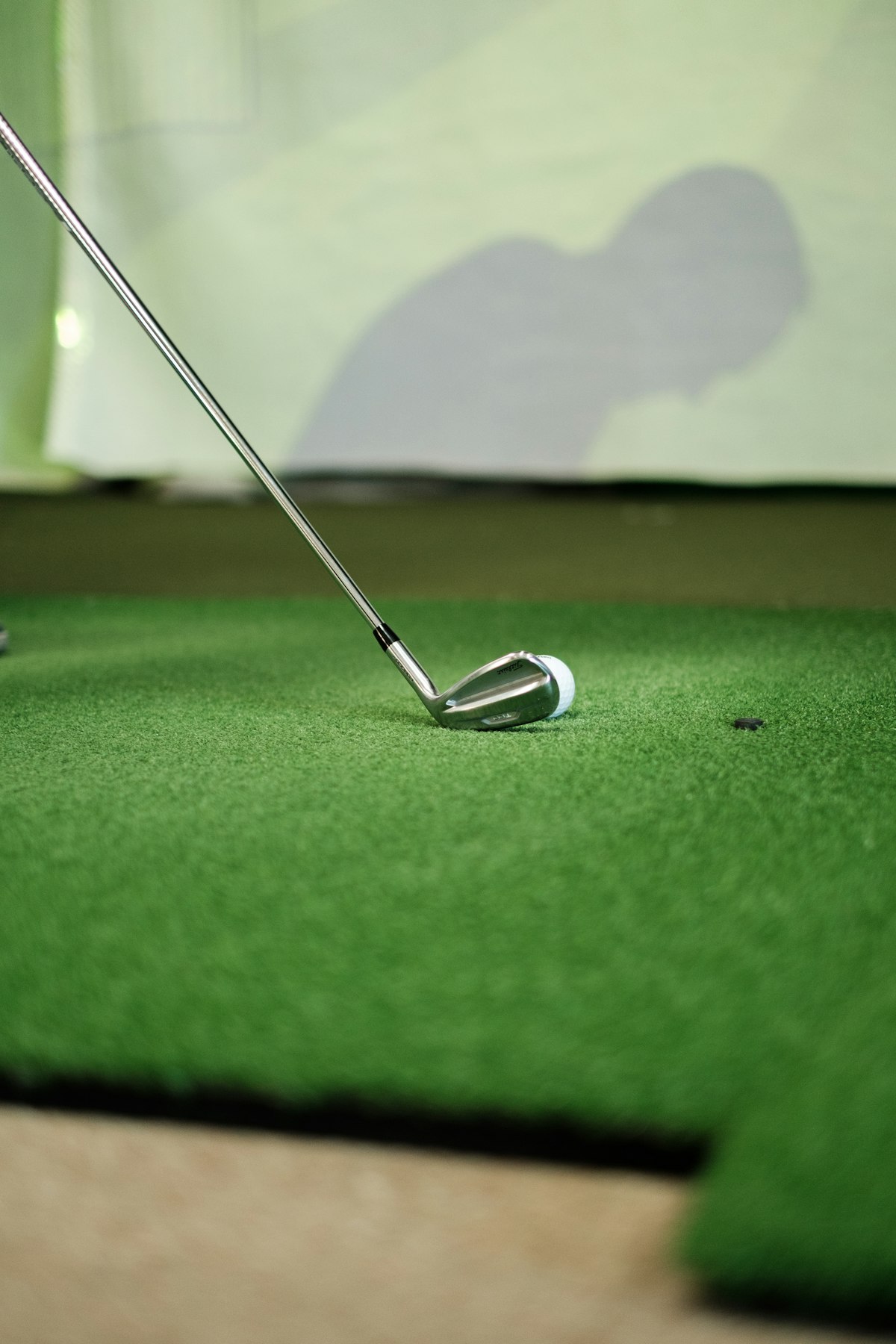
Stand on any practice green on a Saturday morning and watch what golfers actually work on. Nearly everyone is dropping three balls around the hole from six feet and rolling them in, or standing over a single ball reading the borrow from every conceivable angle before committing. Almost nobody is practising the forty-footer. And yet if you tracked every three-putt made by every mid-handicap golfer over a season, the overwhelming majority would trace back not to a bad read but to a first putt that finished six or eight feet short, or barrelled four feet past. The line was never really the problem. The pace was.
This is not a controversial idea among people who study putting statistics for a living, but it runs against how most golfers actually spend their time. Reading a green feels like the skilled part of putting, the part that separates someone who understands slope from someone who does not, so it gets the attention. Speed feels almost too simple to practise seriously, a matter of just hitting it firmer or softer, and so it gets treated as an afterthought rather than the skill that decides whether a hole costs two putts or three.
Why speed matters more than line from distance
From inside ten feet, line genuinely matters a great deal, because the putt has a real chance of going in and small directional errors show up directly in makes and misses. From thirty or forty feet, the putt is not really trying to go in at all. It is trying to finish inside a three-foot circle around the hole, and the shape of that circle is determined almost entirely by how well you controlled the pace. A putt that starts on a slightly wrong line but rolls at the right speed will still finish close. A putt on a perfect line hit six feet too hard will finish nowhere near the hole and turn a comfortable two-putt into a genuine threat of three.
The mechanics of this are straightforward once you notice them. A ball travelling at the correct speed dies into the hole from any reasonable angle within a foot or two either side of the true line, because gravity and the slope of the cup do some of the work for you. A ball travelling too fast takes almost none of that help. It needs to be started on a near-perfect line or it slides past, and even then a fast putt that catches the edge of the hole is more likely to lip out than drop, because there is not enough time for the ball to fall in. Slow the pace down to something closer to what a good lag putter uses and the hole becomes a considerably larger target than it looks.
A practice habit that actually reflects the problem
The fix is not complicated, but it does mean rearranging how a practice session is spent. Rather than dropping balls at six feet, find a spot on the practice green thirty to fifty feet from a hole, ideally with some elevation change, and hit putts with the single goal of stopping each one inside an imaginary three-foot circle. Do not worry about makes. Count only how many finish inside the circle, and pay attention to whether the misses are short, long, or wildly off line, because that tells you which part of the stroke needs the work. Most golfers who try this for the first time discover that their misses cluster short, a habit that comes from decelerating into the ball out of fear of running it well past, which ironically produces worse speed control than committing to a fuller stroke.
What this changes on the course
None of this argues that reading greens does not matter. It matters enormously inside makeable range, and nobody should stop working on it. What changes is the priority on longer putts, where the read should inform the target line but the stroke itself should be built around finishing at the right pace rather than chasing a perfect line that speed will undo anyway. A round with fewer three-putts is rarely the product of a sudden gift for reading borrow. It is almost always the product of a player who quietly got better at leaving the second putt short and straightforward instead of long and knee-knocking. That is a duller thing to work on than green-reading, and a far more useful one.