
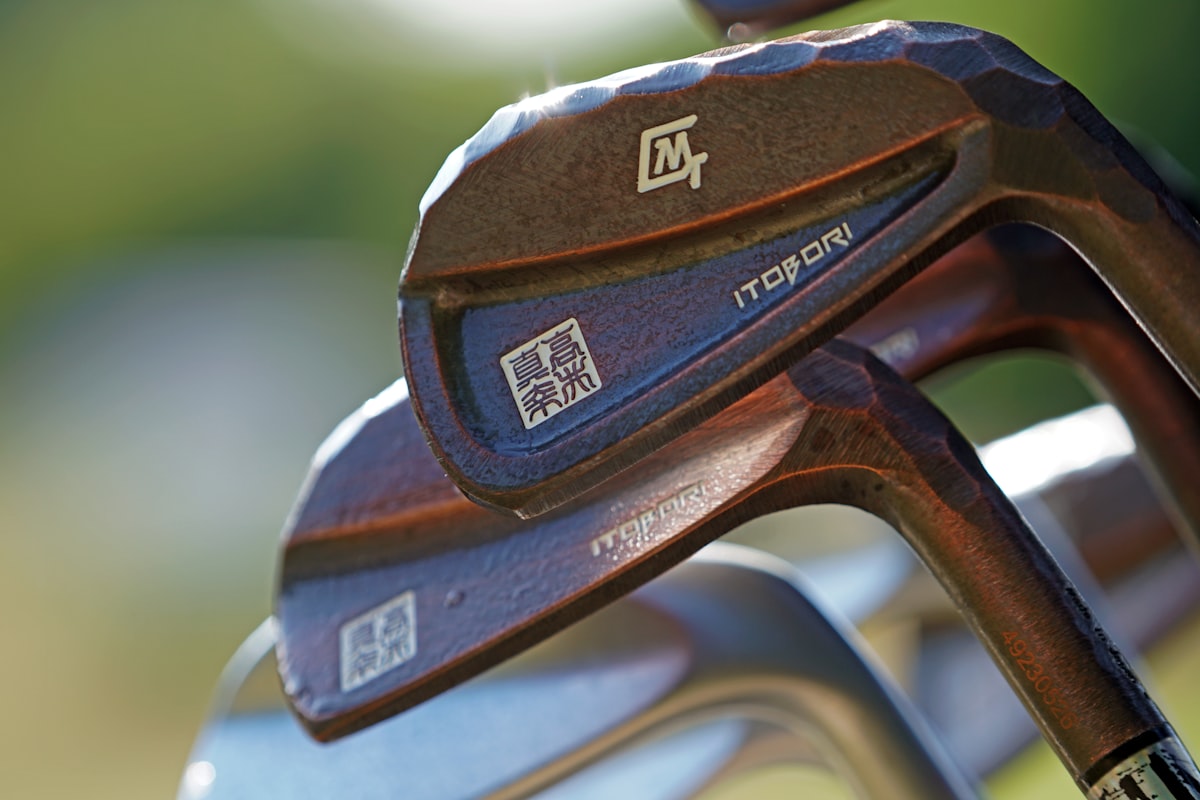
Ask most golfers what separates one wedge from another and they will talk about loft: a 56 versus a 60, a gap wedge versus a lob wedge. Loft is the number stamped on the sole and the one printed on the box, so it is the number everyone learns first. It is also, for most amateurs, the wrong place to start. The number that actually determines whether a wedge behaves the way you expect it to through turf, rough, and sand is bounce, and the shape that determines how that bounce interacts with the ground is grind. Between the two, they do more to explain a chunked pitch or a bladed bunker shot than loft ever will.
What bounce is actually doing
Bounce is the angle between the leading edge of the sole and the lowest point of the sole, measured in degrees and usually printed somewhere on the back of the club along with the loft. A high-bounce wedge, generally anything above 10 degrees, has a sole that sits proud of the leading edge and resists digging into the turf. A low-bounce wedge, typically under 8 degrees, has a sole closer to flush with the leading edge, which lets it slide into firmer ground rather than skimming across the top of it.
The practical effect shows up the moment the club meets anything other than a perfectly struck ball off a tight lie. A golfer who takes a shallow, sweeping divot on a fairway or in first-cut rough generally wants more bounce, because the extra angle keeps the leading edge from catching the turf early and stubbing the shot. A golfer who takes a steep, digging divot, or who plays mostly firm, sun-baked turf, generally wants less bounce, because a high-bounce sole on hardpan tends to bounce the leading edge up into the equator of the ball rather than through it.
Grind is what fine-tunes the shape
Bounce gives you the angle. Grind is the term for how a manufacturer shapes and removes material from specific parts of the sole, at the heel, the toe, or the trailing edge, to change how that angle behaves as the club opens and closes through impact. A wide, full sole with a standard grind is forgiving and simple, which is why it is the default on most stock gap and sand wedges. A narrower grind with material relieved from the heel and trailing edge lets a player open the face for a flop shot or a bunker shot without the leading edge sitting up awkwardly, at the cost of some of that forgiveness on a standard, square-faced strike.
This is where a proper fitting earns its keep, because the right combination of bounce and grind is specific to how a golfer swings and where they play, not to their handicap. A low-handicap player with a steep, aggressive angle of attack on soft turf might reasonably play a lower bounce than a mid-handicap player with a shallow swing on firm, fast fairways. The stereotype that better players automatically want less bounce because it looks more “tour” on the shelf is exactly the kind of assumption that leaves a wedge sitting unused in the garage after a few frustrating rounds.
Matching wedges to conditions, not just to each other
Because bounce is about turf interaction, it is entirely reasonable to carry wedges with different bounce and grind specifications within the same set, built for the shots and conditions each one is most likely to face. A pitching or gap wedge, often used from the fairway on full and three-quarter shots, tends to suit a mid to full-sole grind that behaves consistently on a range of turf. A sand wedge, doing the bulk of its work from bunkers and rough, often benefits from higher bounce and a fuller sole that resists digging in soft sand. A lob wedge, frequently opened for flop shots and delicate greenside work, is where a lower bounce and a narrower grind start to make sense for players skilled enough to use them.
Course conditions matter just as much as the shots themselves. A golfer who plays primarily on firm, links-style turf through the summer and soft, wet conditions through the winter has a genuine case for two different wedge setups, not just two different mindsets. A good fitter, or simply a proper session with a launch monitor and a turf mat that mimics your home course, will show you not just how far a wedge carries but how consistently the sole is behaving through impact across a range of strikes. That is a harder thing to sell on a shelf than a loft number, which is exactly why it gets talked about far less than it should. Get the bounce and grind right for your swing and your course, and the loft you already knew how to choose will finally do what it was supposed to all along.